Black History Month: Rochelle T. Kolawole, M.D.
February 25, 2025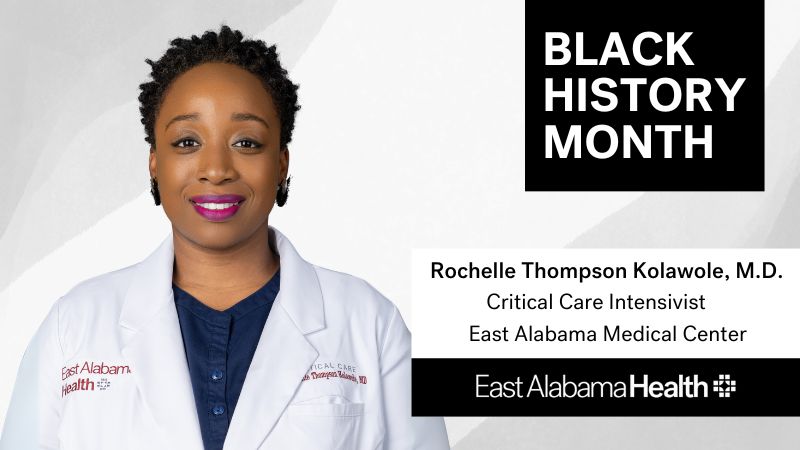
Rochelle Thompson Kolawole, M.D. is a critical care intensivist practicing at East Alabama Medical Center. Originally from Liberia in West Africa, Dr. Thompson Kolawole received her medical degree from the University of Ghana School of Medicine. She completed her internal medicine residency and critical care and infectious disease fellowships at the University of Mississippi Medical Center.
What do you think is the most important issue facing Black communities in healthcare today, and how can physicians help address it?
I think Black communities face many of the same general challenges as other populations in America, often related to the exorbitant and rising costs of healthcare, health insurance and pharmaceuticals. Unfortunately, there is ample research showing these issues are amplified for Black people in America and these healthcare disparities lead to disparities in health outcomes. According to NIH data, Black people in America have five to seven years shorter life expectancy than white, Hispanic and Asian populations. National statistics show Black people have higher death rates from many of the leading causes of mortality including heart disease, stroke, cancer, diabetes, kidney disease, high blood pressure and liver cirrhosis. Black infants die at twice the rate as white infants, and Black women are nearly three times more likely to die from pregnancy-related complications than white women. Many research studies have demonstrated racial differences in medical treatments received for a wide variety of conditions, even when adjusted for things like insurance status, severity of illness, and level of education.
As a Critical Care and Infectious Diseases physician, I take care of patients in life and death situations and interact with families under very distressing and scary circumstances. Beyond providing sound and evidence-based medical care, I've found being polite and speaking kindly goes a long way. I try to take time to listen to my patients, learn what is important to them and their families, and do my best to explain even the most complex diagnoses, procedures and treatment options so that they understand what we're doing. I think we need to prioritize these things for all our patients. It's important for each of us to be sensitive to the historical and cultural context in which we care for these patients. We also need to be aware of contemporary data that tells us Black populations are still negatively impacted by race-based inequities in healthcare. While it may sometimes be a little easier for me to relate to Black patients, I don't get a pass because I'm Black. I believe most people, regardless of race, gender, religion, political leaning, want to feel loved, safe, valued and respected. At the end of the day, Black patients, like all patients, want, need and deserve a healthcare system that does right by them.
What advice would you give to young Black students interested in pursuing a career in healthcare or medicine?
Actively seek out mentors! Be proactive and intentional about making connections with people who are ahead of you in the field. Find a buddy who is pre-med or already in medical school, nursing school, respiratory therapy school or whichever health science program you're interested in, and get pertinent information from them about what prerequisite courses and exams you need to take, about application processes and deadlines, about scholarship opportunities etc. Get involved in your community, participate in local and international outreach experiences and volunteer with health and social organizations with causes you are passionate about. Reach out to physicians and other healthcare providers to arrange shadowing experiences. Use the internet wisely...there are so many resources available at your fingertips.
Can you share a memorable story or experience from your early career that shaped your path?
I decided to pursue a subspecialty in critical care medicine because of a young woman I took care of over a decade ago. She was critically ill and unfortunately did not survive her illness. Sadly, she was a victim of healthcare inequities and I felt helpless. While our paths crossed for a very brief moment in time, I carry her with me everyday. I owe a great deal of who I am as a physician to her.