East Alabama Health Creates Blueprint for Solving Workforce Shortages
January 6, 2026
Categories: Workforce
OPELIKA, Ala.—As workforce shortages continue to challenge health care systems nationwide, East Alabama Health is leading the way with innovative strategies to recruit, train, and retain skilled professionals.
Through a mixture of scholarship programs, innovative and accessible educational opportunities, federally recognized apprenticeships and other hands-on training programs, East Alabama Health has created a model for developing health care professionals.
Designed to create a sustainable workforce and to close critical skills gaps in the industry, the initiative prepares employees for the future in roles such as nursing, medical coding, radiology, emergency services and more.
“Our people are our greatest asset, and by investing in their skills and offering new opportunities to learn, grow and expand, we ensure our patients will continue receiving the best care for decades to come,” said Laura Grill, president and CEO of East Alabama Health. “We’re investing in our people, not waiting for talent to arrive.”
Nursing Education Programs Build Pipeline for Sustainable Access to Local Care
According to a labor statistics report from the Health Resources and Services Administration (HRSA), by 2028 there will be a projected 8 percent shortage of registered nurses nationally, and a 3 percent shortage a decade later in 2038. Along the same lines, the projected number of licensed practical nurses in the workforce in 2028 is expected to meet 83 percent of the national demand. By 2038, that projection dwindles to meeting just 70 percent of the demand.
Rural communities throughout the state of Alabama are facing increasingly severe healthcare staffing shortages, particularly among nurses and other frontline providers.
Solving these shortages requires taking steps now to create accessible, and affordable, ways for employees to pursue higher education. To do that, East Alabama Health partnered with local institutions like Auburn University, Southern Union State Community College, and Chattahoochee Valley Community College (CVCC).
“We saw an opportunity to fundamentally transform how nurses enter and advance in this field, and collaboration with our local colleges and universities became a cornerstone of that vision,” Grill said. “By aligning our educational pathways with higher-education excellence and real-world clinical experience, we are creating a sustainable pipeline of highly skilled nurses who are prepared to serve our communities for years to come.”
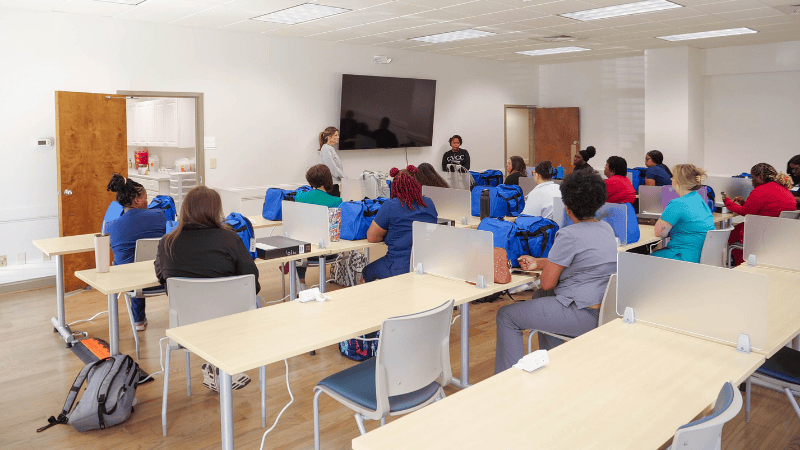
In 2024, East Alabama Health partnered with Chattahoochee Valley Community College (CVCC) to launch an on-site LPN school to address the need for more nurses in Alabama. Students enrolled in the program get paid while attending class, lab and clinicals and maintain employment during school. After finishing their degree and achieving licensure, the students step into their new jobs at East Alabama Health as LPNs.
To provide employees with additional opportunities to obtain a nursing degree, East Alabama Health sponsors 10 spots each semester for employees to enroll in Southern Union State Community College’s nursing program.
The partnerships with local schools also extend into the organization’s nurse apprenticeship program. Students pursuing a nursing degree at Auburn University, Central Alabama Community College, CVCC, SUSCC, or Troy University at Montgomery are eligible to apply for East Alabama Health’s Registered Apprenticeship Program (RAP), approved by the U.S. Department of Labor. This designation ensures the program meets national standards for structured, work-based learning and provides participants with progressive, paid on-the-job experience alongside classroom instruction.
For selected applicants, East Alabama Health covers tuition, books and fees in exchange for a work commitment following degree completion. Apprentices are paired with a dedicated nurse mentor for their clinical rotations and receive payment as they complete the clinicals required for their degree. In addition to payment for required clinical hours, apprentices are also guaranteed 24 additional hours of work per month, providing financial security and even more exposure to hands-on training.
Federally Recognized Apprenticeships Offer Sustainable Frontline Opportunities
Beyond expanding opportunities for nursing careers, East Alabama Health’s apprenticeship programs extend to training employees for roles such as medical coders, scrub techs and certified nursing assistants (CNA).
As demand for accurate clinical documentation and billing grew, leaders saw an opportunity to cultivate this talent from within. Through a partnership with Wallace State Community College, employees receive on-the-job training and coursework over a one-year apprenticeship.
“Medical coding is a highly specialized field that requires comprehensive training,” said Claire Payne, director of Medical Records. “Through the Workforce Development program, two employees successfully earned their Certified Coding Specialists (CCS) credentials on their first attempt and have since transitioned into full-time coding specialist positions that might have otherwise remained vacant.”
Payne highlights how the Medical Coding Program is mutually beneficial for both the employee and the organization.
“The success of this program demonstrates the power of investing in our workforce by creating opportunities for employees while meeting vital organizational needs.”
The journey doesn’t have to end with the CCS credential. Employees can further pursue a follow-up apprenticeship aimed at preparing for the Certified Professional Coder exam.
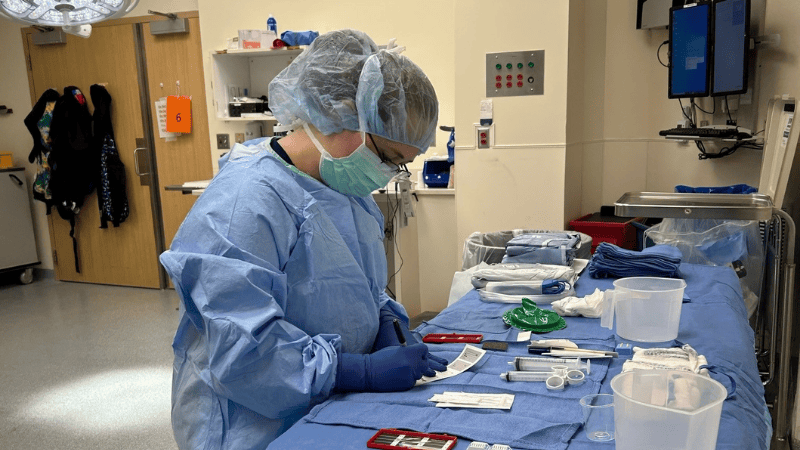
Another high-demand, low-supply career that East Alabama Health is training for are surgical techs, also known as scrub techs. Scrub techs manage the instruments that surgeons use during a procedure.
In 2022, the organization began a Scrub Tech Apprenticeship Program with the intent to prepare qualified East Alabama Health employees in becoming safe and competent scrub techs. Throughout the year-long program, employees learn, train and practice skills. Since starting, more than 20 employees have become certified as scrub techs through the program.
“The Scrub Tech Apprentice program has been a valuable addition to the training and recruitment of scrub techs,” said Denise McKeller, Surgery manager at East Alabama Medical Center. “These women and men get one on one hands on training with skilled mentors. The apprentices have the chance to rotate through all surgical areas in the hospitable and then once a specific specialty is matched for each apprentice, they begin orientation with the advantage of knowing their surgeons and peers.
“It has been extremely rewarding to see apprentice program graduates now mentoring current apprentices.”
Transforming Education through Scholarships, Tuition Reimbursement & OTJ Training
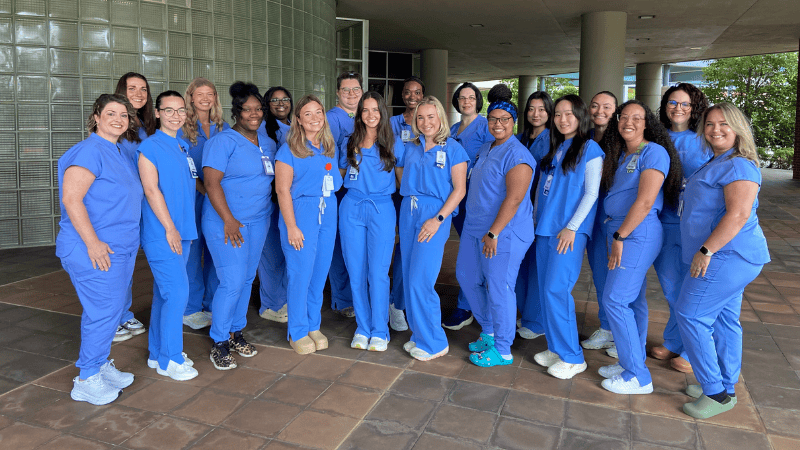
East Alabama Health is addressing the health care workforce shortage by creating a range of opportunities that empower individuals to learn, grow, and advance in their careers while contributing to the community. These programs are designed to remove barriers—financial, educational, and experiential—so that anyone with the passion for healthcare can find a pathway forward.
For those pursuing formal education, scholarship loans and tuition reimbursement programs provide critical financial support. Traditionally, those pursuing higher education face a tradeoff of losing income as well as access to key benefits such as insurance. The workforce development programs at East Alabama Health not only cover educational costs but also pay employees as they participate.
Between October 2024 and September 2025 alone, East Alabama Health provided nearly $700,000 in educational funding for existing employees through scholarship loan programs and tuition reimbursement.
“We recognize the friction that occurs when balancing education and work, and we structure our programs to make them as accessible as possible,” said Susan Johnston, chief human resources officer. “If it is someone’s goal to go back to school and improve themselves and by extension the care provided to our patients, we make every effort to assist with that goal.”
Hands-on experience is another cornerstone of East Alabama Health’s workforce development strategy.
The organization's Nurse Residency Program is designed to support the critical transition from student to professional nurse. Recognizing that the first year of practice can be one of the most challenging, the program creates a supportive cohort community where new nurses are paired with experienced mentors and gradually integrated into clinical work. This combination of guidance, hands-on experience, and peer support ensures that newly graduated nurses build confidence, refine their skills, and are fully prepared to provide high-quality care while thriving in their careers.
East Alabama Health’s Earn and Learn program allows high school students an opportunity to work in areas of the organization that fit their career goals. Earn and Learn students can be found in nursing units, radiology, ambulances, the maintenance department, and nearly every other department that keeps East Alabama Health running.
In addition, job shadowing programs give participants, usually high school and college-level students, the opportunity to see health care in action, learning directly from experienced clinicians and staff.
For many, these immersive experiences help clarify career goals and identify ways to pursue those goals with the help of East Alabama Health.
Together, these workforce training programs create a continuum of opportunity—welcoming learners at all levels of education and experience, nurturing their growth, and helping to build a stronger, more resilient healthcare workforce for the region.
By investing in comprehensive workforce development programs, East Alabama Health is not only providing individuals with the skills, support, and opportunities they need to advance their careers—it is actively helping to solve the broader healthcare worker shortage. Through building a sustainable pipeline of skilled professionals who are prepared to meet the needs of their communities today and in the years to come.
-###-
About East Alabama Health
East Alabama Health encompasses East Alabama Medical Center in Opelika, EAMC-Lanier Rural Emergency Hospital in Valley, the Spencer Cancer Center in Opelika, the Auburn Medical Pavilion, East Alabama Medical Center North in Opelika, and a host of other key medical clinics and practices that help provide a continuum of care to patients throughout an 11-county area. EAMC is a 316-bed regional referral hospital. EAMC-Lanier Rural Emergency Hospital provides emergency and outpatient services while its campus also features a nursing home and an ambulatory surgery center. East Alabama Health employs about 3,800 people and is the second largest employer in the region, trailing only Auburn University.

A Future-Ready Healthcare Workforce
Learn how East Alabama Health is transforming the way medical professionals are trained to ensure Alabamians have access to high-quality, compassionate health care.
Learn More