First TAVR Procedure Performed at EAMC
May 28, 2021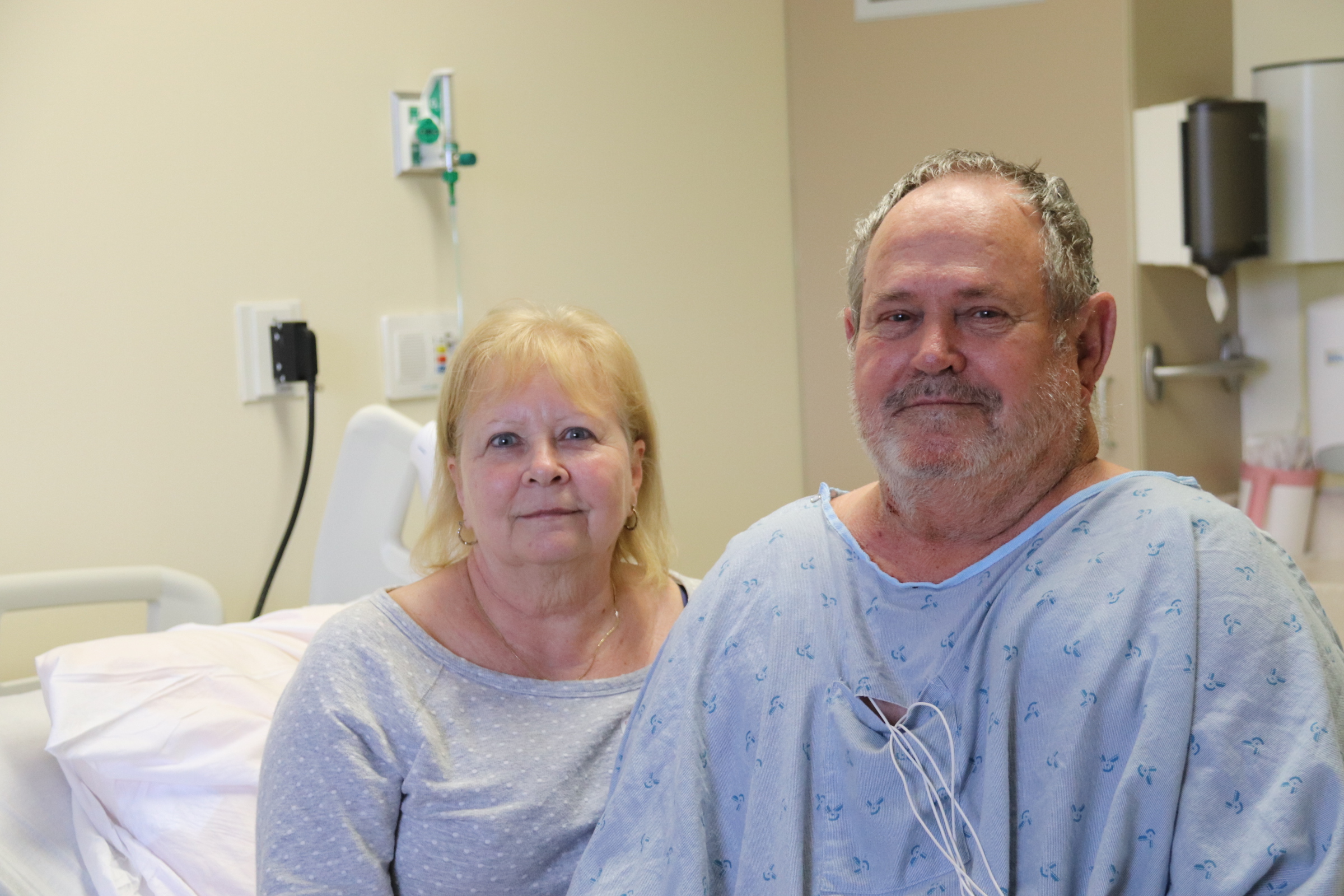
James Riddle of Beauregard is a telephone cable splicer contractor. That means he travels throughout the southeast in his bucket truck to help people stay connected. The tables were turned on him earlier this month (May 3) when he needed a team of doctors and clinicians at East Alabama Medical Center to perform a transcatheter aortic valve replacement (TAVR) to help his heart stay connected.
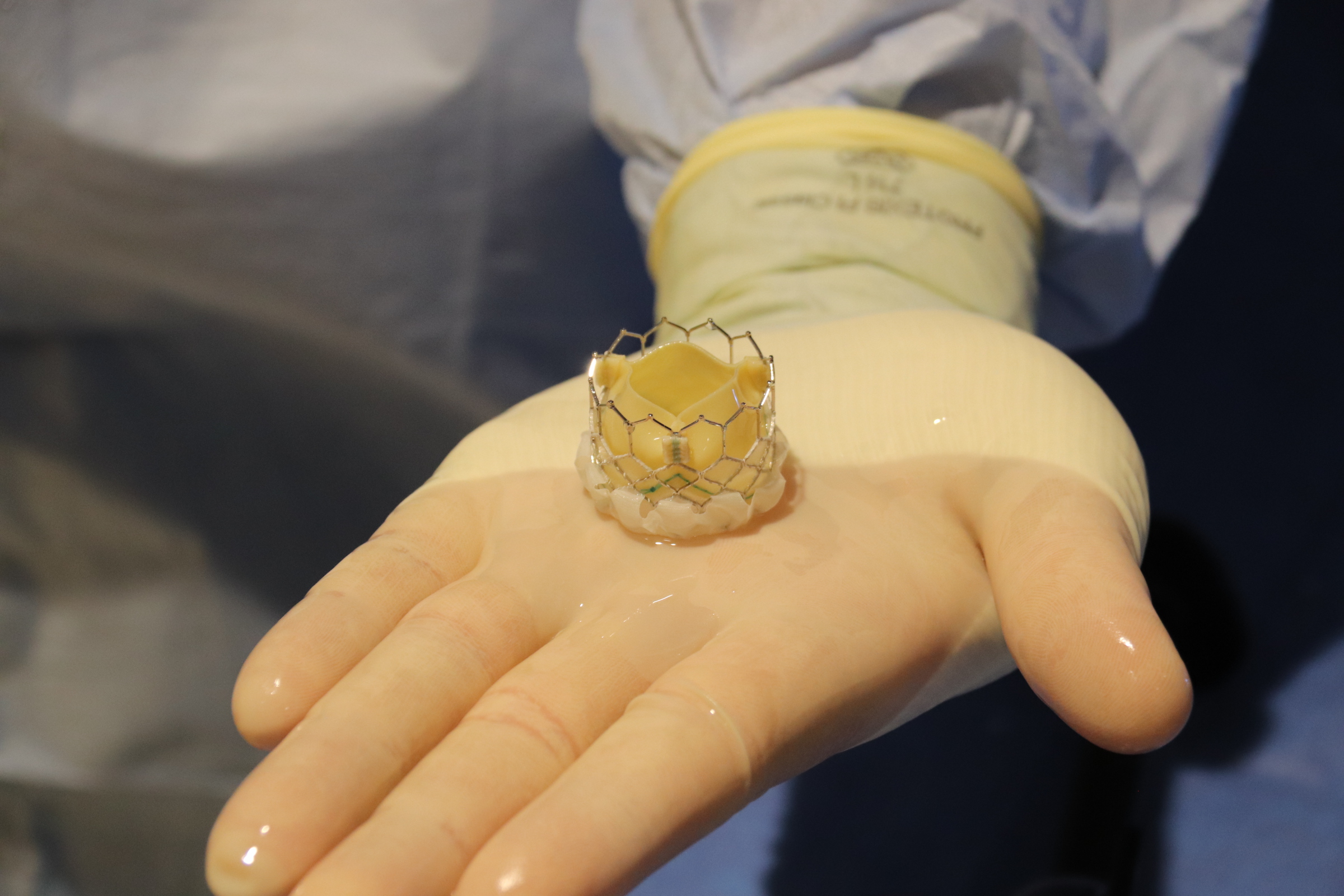
A TAVR (pronounced tav-er, TAV rhymes with “have”) is a procedure that replaces a diseased aortic valve with a man-made valve, and it was the first time the procedure had taken place at EAMC. Previously, open-heart surgery would have been needed to help Riddle at EAMC, or he would have had to travel out of town for the TAVR procedure. Riddle, 73, and his wife of 53 years, Roxanne, made the decision not to travel.
“We were a little cautious when they told us we would be the first one,” said Roxanne while sitting in James’ room two days after the procedure and less than two hours before the Riddles would go home. “We said we don’t want to be the first one,” added James. “But once they told us they have done it in other places,” James stated before Roxanne finished his sentence with “we said we were good with it.” “I’m just happy they have this process, so it’s better for me and easier on the body,” stated James.
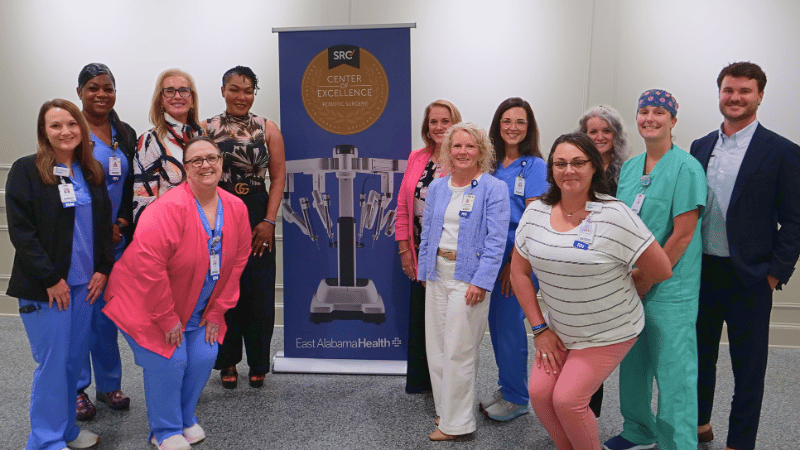
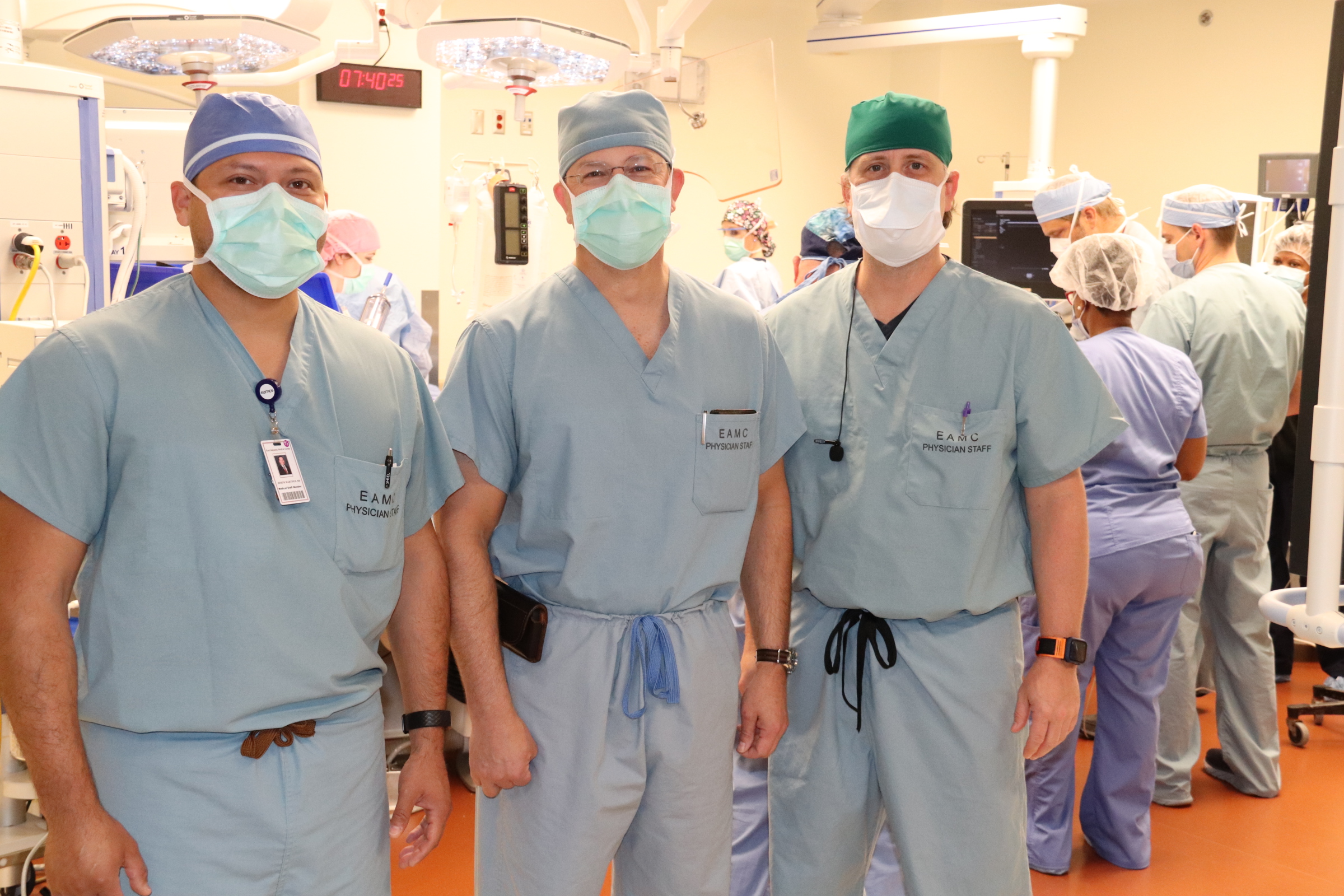
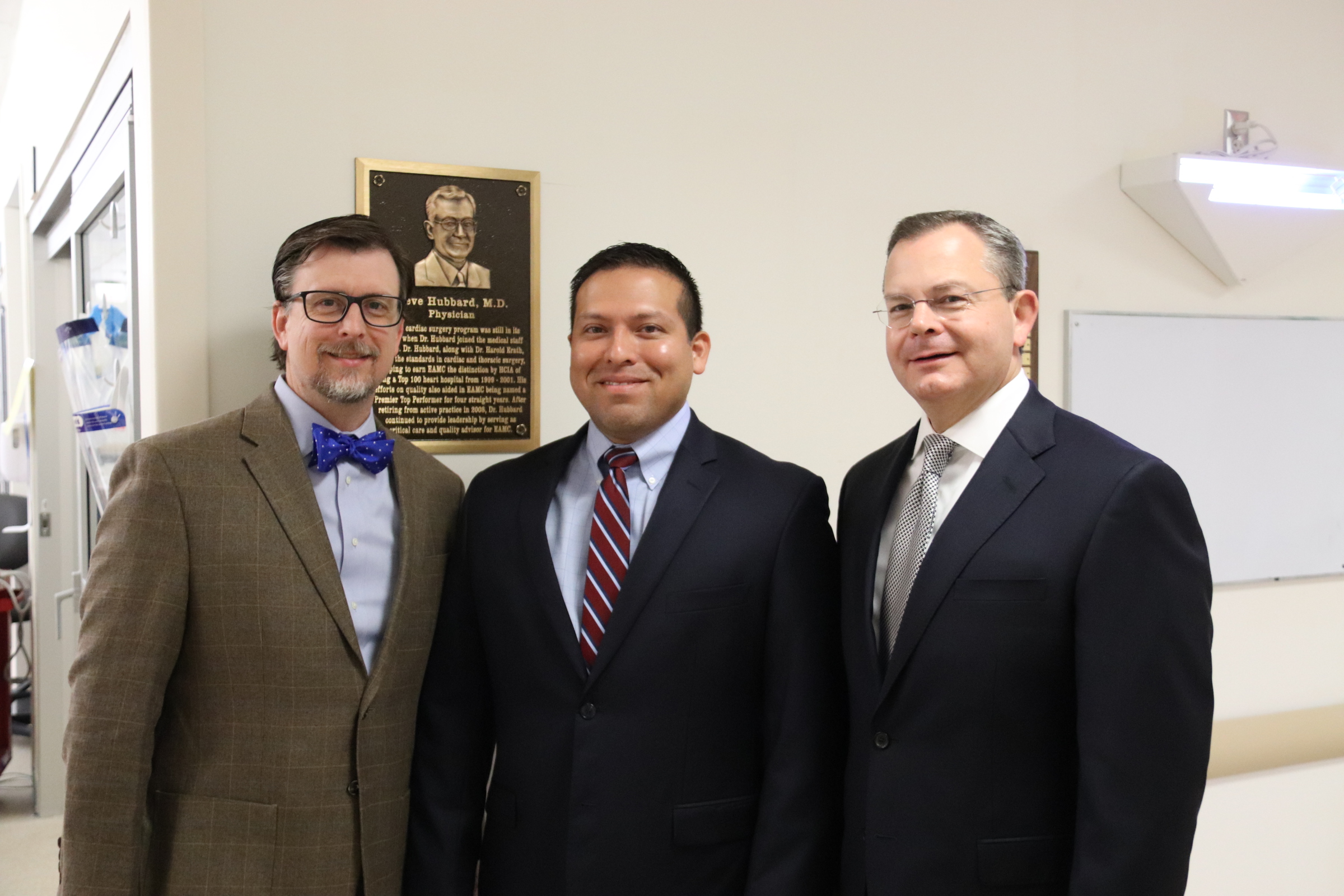
When the Riddles say “they,” it’s Stephanie Kendrick, RN (Heart and Valve Clinic coordinator) and a team of physicians and clinicians who were all involved in the preparation—and follow-through—of this new procedure. Led by interventional cardiologist, Scott Reames, D.O., and cardiac surgeons, Joseph Martinez, M.D. and Barry Crowe, M.D., the team trained together for more than a year in preparation for beginning the TAVR program at EAMC.
A Hybrid Procedure
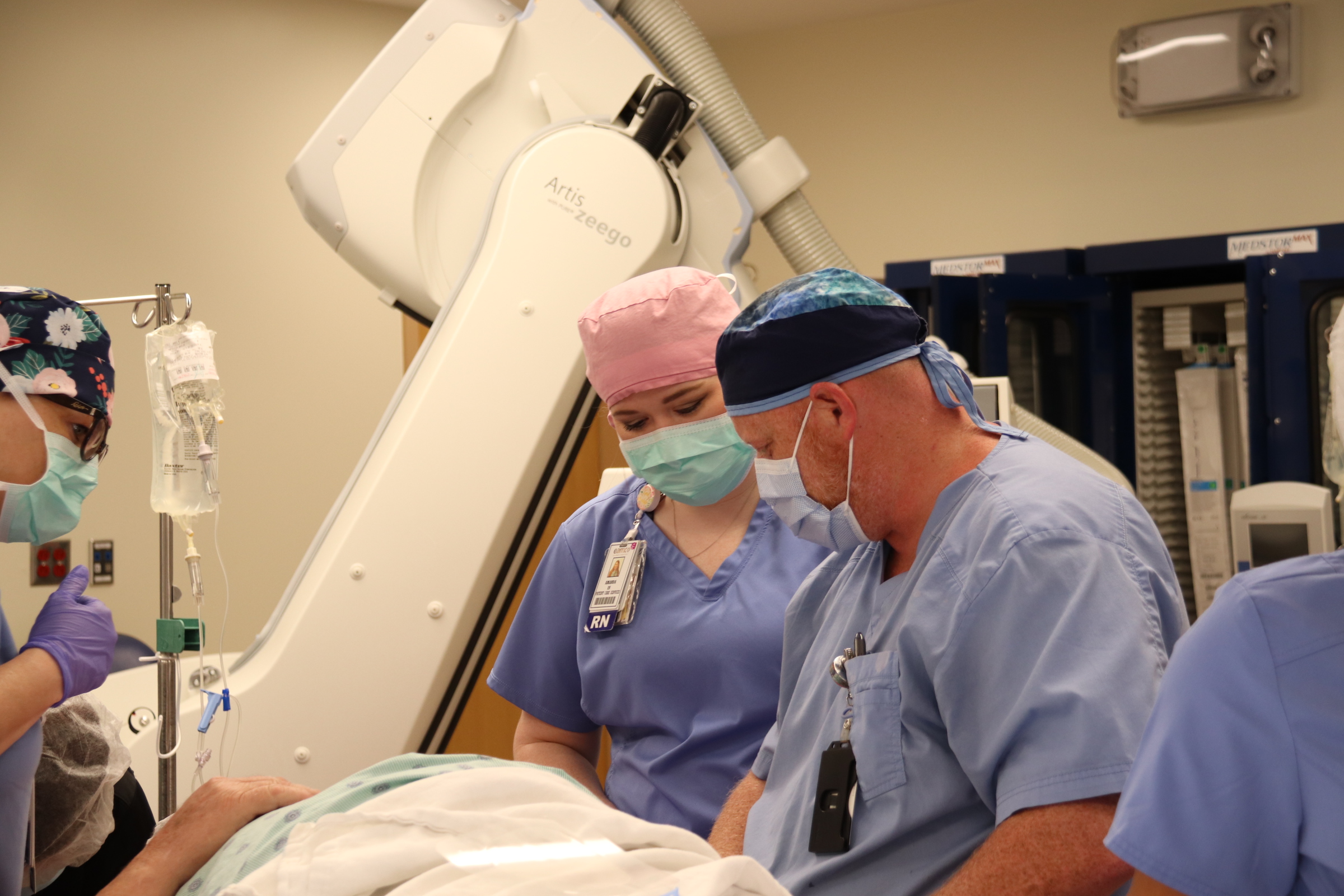
“The procedure itself is very much like a catheterization procedure which we do every day,” states Dr. Reames. “From a patient’s perspective, the cameras look the same, the staff look the same, and the wires are the same. When we bring in the OR team, they’re there to support you when we get that valve ready to cross.”
“TAVR is a hybrid procedure done with both cardiac surgery and interventional cardiology where we go in through the groin instead of cracking the chest bone or making any other surgical incision,” explains Dr. Martinez. “You stick a needle in the groin and put a little wire—a catheter—up through the groin and into the chest, across the valve, and then you slide a new valve over that wire and you deploy the valve. This is all minimally invasive.”
Dr. Crowe, who has been with EAMC for 12 years, says “the first TAVR case went phenomenal, and the reason it went phenomenal is because of all of the planning that went into it.” He states that “none of this is possible without the 100 percent dedication of the staff. Dr. Martinez and Dr. Reames did a fantastic job making this happen and everybody that surrounded them absolutely gave hours in making sure everything went smoothly for the patient (Mr. Riddle), and for patients to come.”
Building A Team
While James Riddle was not aware until March that he would need a heart procedure, the process that allowed him to have it at EAMC began in earnest more than a year ago.
Dr. Martinez explains the makeup of the team. “The structural heart program is a new division within cardiovascular disease, and our clinic involves cardiac surgery, interventional cardiology, cardiac anesthesia—which is Dr. Matt Hull—and Stephanie Kendrick, our clinic coordinator and a slew of other staff members who are involved in this. You have to have all of those pieces in place before you can start a valve clinic like this.”
“It’s been a wonderful experience watching the evolution of this program,” Dr. Crowe states. “I’ve always felt that TAVR was going to be the next part of the evolution in developing our heart program here, and the genesis of this started about two-and-a-half years ago.” Dr. Crowe says that it became obvious that there was an increasing population needing these services. “We were sending a lot of this out to academic hospitals and we felt like we needed to recruit physicians who would be able to perform this procedure as a service to our residents. Dr. Reames and Dr. Martinez were recruited heavily for this procedure.”
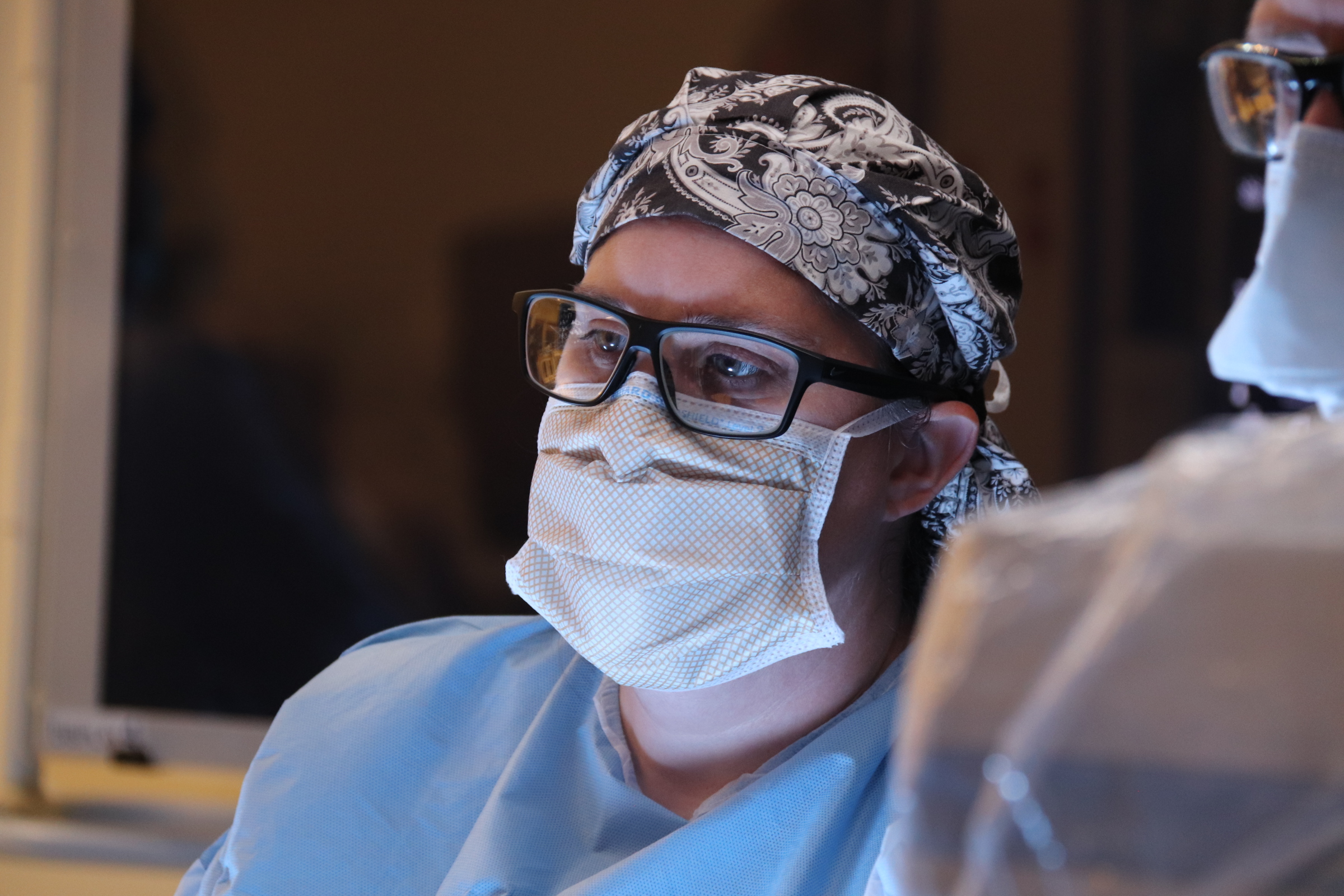
On the day of Mr. Riddle’s surgery, the team went through the exact same processes that they followed during several rehearsals. “We did a few practice runs in that room (hybrid operating suite) so that we knew, for example, where the bed was going to be, where the screens would be, and so forth,” says Dr. Martinez. “We practiced that multiple times before the patient ever came into the operating room so that the day that the patient actually came in, it’s as if we had done it before already. We practiced what we were going to say, what the x-rays were going to look like, where everyone was going to stand—we had it all mapped out—and on the day of the procedure, it’s like we had done it before. That’s what it felt like.”
What To Look For
“To have this procedure,” explains Dr. Reames, “you have to have severe aortic stenosis. But not only does it have to be severe, you have to have symptoms. A lot of people feel like ‘I’m just getting old. Increasing fatigue and shortness of breath is really when I want to capture those people because if it’s really from aortic valve disease, it’s only going to get worse as time goes by.”
Dr. Reames adds. “If you’ve been told you have a murmur, we want to capture those patients early on. We want to get them better before they get extremely sick and this becomes more of a high-risk procedure.”
Dr. Martinez says the discovery of a murmur is one of the “biggest clues” that a patient may need a TAVR. “There are multiple reasons to have murmurs because there are different valves in the heart, but the TAVR procedure is specifically for the aortic valve. Specifically, aortic stenosis—calcification of the valve.” He says the aortic valve “doesn’t open appropriately and it’s kind of stuck in a position, and so the heart has to overwork to get the blood over this calcified, stiff valve.
“And over time of the heart squeezing so hard to overcome this barrier, you can go into heart failure. Most patients develop chest pain and they develop shortness of breath with activity—those are the traditional symptoms of aortic stenosis. Severe aortic stenosis with symptoms is the primary indication for TAVR.”
Success
“I can’t impress upon the community enough what a wonderful achievement this has been for the hospital and the staff because there are so many other things (other percutaneous procedures) that this will bring,” says Dr. Crowe. “One of the blessings for the community is to be able to have high quality services right here at home where they don’t have to travel. That’s something that we have all been very passionate about, not only from a technical aspect but from an interpersonal aspect.”
Dr. Reames feels the preparation put in prior to surgery is what made the day a success for the Riddles. “Bringing TAVRs into a local hospital like this is an extravagant amount of work just because you want to teach everyone everything you possibly can,” he says. “Not only the procedure itself, but what to look for. You want really good outcomes so you want everyone to be really well educated. A lot of the past year was simply teaching. Doing a lot of teaching to the primary doctors, to cardiologists, to the staff. Making them realize this is really good for the patients and we’ll get them (patients) back to see them and in better health very quickly.
“This case was planned out very precisely. UAB was very nice to allow us to bring up all of our team, let them kind of go through cases and help relax them to see ‘here’s what’s going to happen.’ I can tell people all day ‘relax, I’m going to help you, we’re going to get through this, but to have them come up with us and see what’s happening, what really are the steps that go through this, made this process run very smooth.”
“Obviously, we wanted the first one to be perfect,” states Dr. Martinez. “But we have it set up in a way that this is going to be the process for every patient. We want every patient to know that when they come see the structural valve clinic at East Alabama, they’re going to be taking care of from start to finish. This isn’t just come in, have a procedure and then go away,” he says. “You’re going to come here and we’re going to learn as much about you as we can. We’re going to walk you through the process. We never want a patient to feel alone, like they are abandoned and just walking through a hospital system they have never seen before.”
James Riddle says he couldn’t have been more pleased. “Everyone just seemed to be so professional; getting together to talk about it and say how they were going to do this and that.”
His wife, Roxanne, agreed. “Once we found out they have experience, we said ‘this is great, we don’t have to travel.’ We had total confidence in all of the doctors. We felt very privileged, especially with Stephanie (Kendrick), because she walked us through everything. She met us at all of the appointments and she walked us through everything.”
“That’s our plan,” says Kendrick, “to do it that way every time. It’s a complicated procedure and there are a lot of things that have to happen and we want to make sure it’s done correctly.”