Stroke Risk & Symptoms
Knowing the warning signs of a stroke can save a life.
Every minute counts when it comes to stroke. Recognizing the signs early and understanding your risk can mean the difference between a full recovery and lasting disability. At East Alabama Health, our mission is to give you the knowledge, tools, and care you need to act fast and protect yourself and your loved ones.
If you think someone is having a stroke, call 911 immediately.
Recognize the Signs (B.E. F.A.S.T)
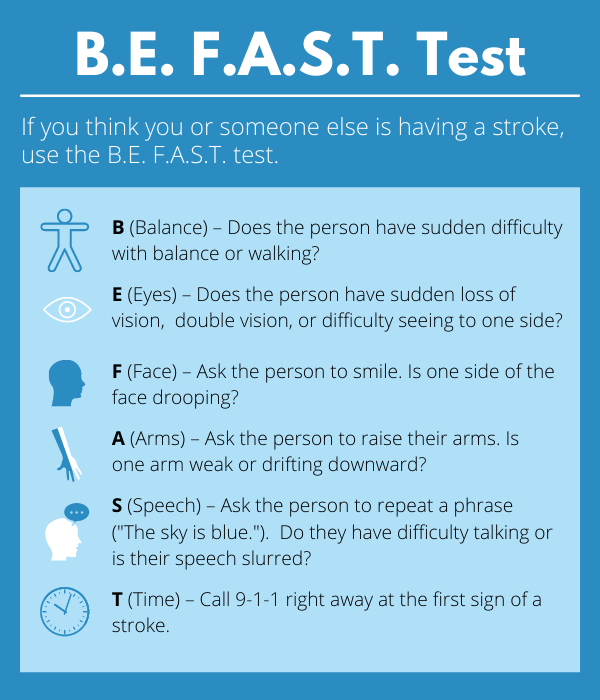
When it comes to stroke, every second matters. If you think someone may be having a stroke use the B.E. F.A.S.T test to spot the signs.
- B - Balance: Does the person have sudden difficulty with balance or walking?
- E - Eyes: Does the person have sudden loss of vision, double vision, or difficulty seeing to one side?
- F - Face: Ask them to smile. Does one side droop?
- A - Arms: Ask them to raise both arms. Does one drift down?
- S - Speech: Ask them to repeat a simple phrase. Is it slurred or strange?
- T - Time: If you notice any of these signs, call 9-1-1- right away.
Understanding Stroke Risk Factors
Certain health conditions and lifestyle choices increase your risk of stroke. Some risks can be managed, while others cannot.
Risk factors you cannot control:
- Age - The chance of having a stroke more than doubles for each decade of life after 55.
- Gender - Stroke is more common in men than women. However, more than half of total stroke deaths occur in women. Use of birth control pills and pregnancy pose special stroke risks for women.
- Race - African Americans have a much higher risk of death from stroke. This is partly due to increased rates of high blood pressure and diabetes.
- Heredity - Your stroke risk is greater if a parent, grandparent, sister, or brother has had a stroke.
- Prior Stroke, TIA, or Heart Attack
- Sickle Cell Disease
Risk factors we can screen for and can help you control:
- Diet - Diets low in salt and low in fat can lower your blood pressure and, more importantly, lower your risk for stroke.
- Medications - Medications should be taken exactly as directed and should not be stopped unless you are told by your physician. If you are experiencing side effects of these medications, speak to your doctor or pharmacist.
- Carotid Artery Disease
- Peripheral Artery Disease (PAD)
- Atrial Fibrillation
- Coronary heart disease, congestive heart failure, cardiomyopathy (enlarged heart), heart valve disease, and congenital heart defects
- High Blood Pressure - High blood pressure is the number one cause of stroke.
- High Cholesterol
- Smoking
- Obesity