OPELIKA, Ala.- In Robert Williams’ line of work as the market president of Cadence Bank, a score of 849 is practically perfect for a credit score. But when the technician who performed Williams’ calcium scoring scan revealed the results, the longtime banker could hear concern in the technician’s voice.
A few weeks earlier, Williams had never even heard of a calcium scoring scan. That changed when Merry Burt, a fellow member of the Opelika Rotary Club, stood up during their January meeting to tell everyone they should consider getting one.
“During our Rotary meeting, Merry stood up and said you all need to take a calcium test, and we all said, ‘what the heck is a calcium test,’” Williams recalled. “She explained that her husband, Larry, who took the calcium test without having any symptoms, had to have quadruple bypass surgery.”
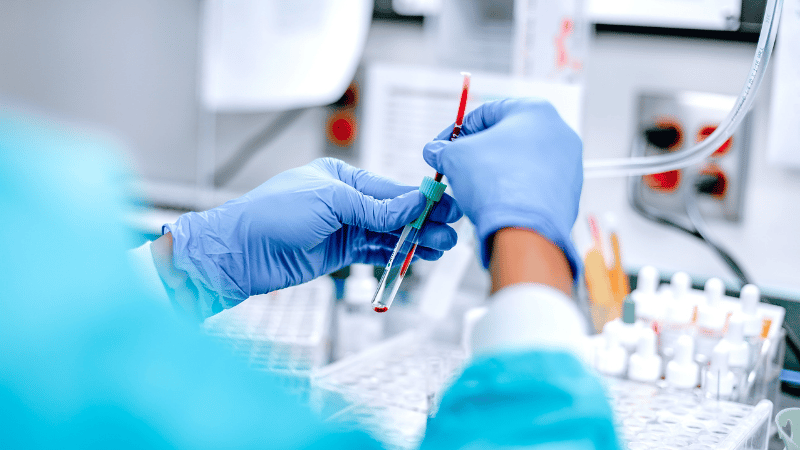
A calcium scoring scan is a noninvasive CT scan that measures calcium build-up in the artery walls. The test effectively determines someone’s potential risk of having a sudden cardiac event, such as a heart attack.
Heeding Burt’s advice, Williams and a few other Rotary members scheduled calcium scoring scans at the Auburn Medical Pavilion. Since it was Heart Month (February), Williams and his friends took advantage of East Alabama Health’s (EAH) promotion offering calcium scans for $50, half the usual price.
“The machine went around for a couple of minutes taking photos of my heart, and then the tech had me look at the computer which showed the calcium buildup in my heart,” Williams said. “That’s when the tech said, ‘Oh my, it’s 849,’ and immediately got on the phone with my internal medicine doctor, Dr. (Michael) Gunter.”
Williams score of 849 was more than double the score indicating cause for concern. Instead, his score indicated he needed to act quickly.
“The best score on one of these tests is zero, and they get a little giddy when it gets to 400,” Williams said.
Following the scan, he set up an appointment with Dr. Gunter, who, after reviewing his results, referred him to a cardiologist for a stress test.
Unfortunately, the stress test results revealed that Williams would need to have a heart catheterization procedure to place stents in his heart. At least that was the plan until Dr. John Mitchell told him that while performing the procedure that he found Williams would not be able to have stents due to the severity of the blockage.
The only option left on the table was quadruple bypass surgery, and that led him to Dr. Barry Crowe, a cardiothoracic surgeon with Heart and Lung Surgeons of East Alabama who operates at East Alabama Medical Center.
“The blockage was a ‘widow maker,’ which is a bad place to be,” Williams said. “Dr. Crowe said I was a candidate to drop dead at any point because of the widow maker blockage.”
Williams, who grew up in Opelika and is an active member of the community, couldn’t fathom the thought of going elsewhere for his procedure and post-op care.
“I had friends ask ‘Are you going to have it in Birmingham or Atlanta?,’ and I said ‘Why would I go somewhere else when we have great care here at EAMC!’ I have the comfort of knowing that I live, breathe, work, play and eat with the all the people here, and they have a vested interest in seeing me get better.”
Everything went smoothly throughout the entire process, but Williams did have one concern.
“The nurses and doctors in pre-surgery did such a great job of educating my wife and me on the process, so that eased a lot of anxiety,” he said. “Quite frankly, I’d had four of my five shoulder surgeries in this hospital, and more than anything, I was worried about the anesthesia drug and what I might say or do.”
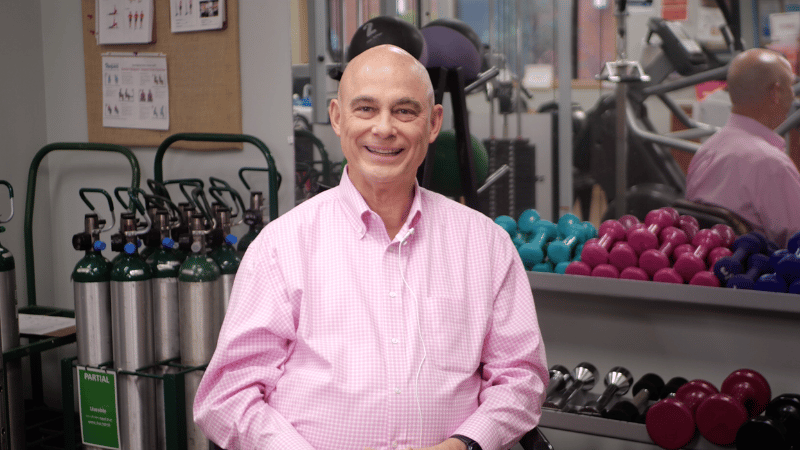
A few weeks after the procedure, Williams began cardiac rehab at EAMC. The 12-week program is an outpatient exercise and secondary prevention program that helps patients strengthen their heart after an event or procedure. It also helps educate patients on lifestyle choices that build and maintain a healthy heart.
Three mornings a week, Williams spends an hour exercising with cardiac rehab. He says the rehab program isn’t all work and can actually be fun.
“The cardiac rehab team is full of rock stars,” he said. “I actually feel a lot better at the end of each workout. They know that once you finish [the program], you are going to be better, and you’re going to do the things that you want to do.”
With the help of the cardiac rehab team, Williams is already starting to get back to doing the things he wants to do.
“One of the goals I had going in was to hit a golf ball again,” he said. “Well, this past Sunday, which was week nine, I hit a golf ball.”
For Williams, he recommends everyone get a calcium scoring scan regardless of if they have symptoms, as it could be the difference between life and death.
“The calcium test basically saved my life,” Williams said. “The calcium test saved my life, and the doctors and nurses are the ones who put my heart back together and made it so that I can stand upright and walk another day.”
-###-
About East Alabama Health
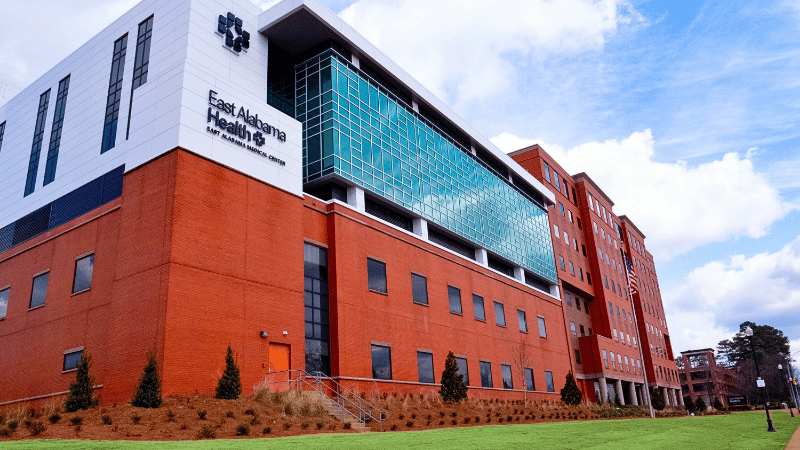
East Alabama Health encompasses East Alabama Medical Center in Opelika, EAMC-Lanier in Valley, the Spencer Cancer Center in Opelika, the Auburn Medical Pavilion and a host of other key medical clinic and practices that help provide a continuum of care to patients throughout an 11-county area. EAMC is a 314-bed regional referral hospital with a 26-bed Skilled Nursing Facility, while EAMC-Lanier provides inpatient services as well as a nursing home, an acute rehab unit and an ambulatory surgery center. East Alabama Health employs about 3,500 people and is the second largest employer in the region, trailing only Auburn University. For more information, visit www.eastalabamahealth.org.